Core Concept
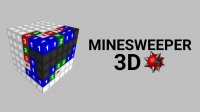
Spatial Deduction Cube takes the familiar idea of a logic grid and expands it into three dimensions. Instead of working on a flat surface, players interact with a cube composed of smaller blocks. Each block can be either safe or contain a hidden hazard. The goal is to identify all hazards without triggering them, using only the clues provided.
Number Clues and Adjacency
When a player clears a safe block, it reveals a number. That number indicates how many of the neighboring blocks contain hazards. Because the playing field is a cube, adjacency includes blocks directly above, below, and on all four sides. This three-dimensional adjacency rule is the key difference from flat puzzles and requires careful spatial thinking.
Progression and Difficulty
The game offers multiple grid sizes, allowing players to start with smaller cubes and gradually move to larger, more complex configurations. Larger cubes introduce more blocks and more interconnections, making the deduction process more demanding. This structured progression helps players build confidence and skill over time.
Controls and Interface
The controls are designed to be straightforward. Players tap or click on any block to reveal its content. A long press or right-click marks a block as a suspected hazard. The interface is clean, with minimal visual clutter, so players can focus entirely on the logical challenge. No timers or pressure are present, allowing for relaxed play.
Family-Friendly Design
All content in Spatial Deduction Cube is appropriate for players of any age. There are no violent themes, scary images, or inappropriate material. The game emphasizes mental exercise and problem-solving, making it a suitable choice for family game time or solo brain training sessions.








Comments
0 comments