Core Arrangement Mechanics
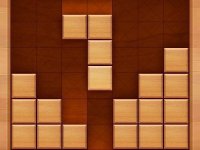
Players receive a set of geometric pieces and an empty board. The objective is to fit every piece exactly into the board, covering all available spaces. Pieces can be rotated before placement, and the system provides clear feedback when a piece is correctly positioned. This straightforward loop forms the foundation of every level.
Progression Through Complexity
Early levels introduce simple shapes and open boards. As players advance, new piece forms appear, and the boards become more irregular. Later stages may include obstacles or fixed blocks that limit placement options. This gradual increase in difficulty ensures that players build skills naturally without sudden frustration.
Visual Design and Focus
The interface uses a clean, minimal aesthetic. Colors are soft and distinct, helping players differentiate pieces from the background. No distracting animations or sound effects interfere with concentration. This design choice supports extended play sessions without visual fatigue, making the game accessible for younger audiences and adults alike.
Pacing and Player Control
There are no timers or score counters that create urgency. Players can pause at any moment and return later. This structure suits those who prefer to solve problems at their own rhythm. Each level can be attempted multiple times, encouraging experimentation with different placement strategies.
Family-Friendly Design Principles
The content contains no themes that require parental guidance. All visuals are appropriate for children, and the mechanics rely on logic rather than speed or violence. This makes the game suitable for shared play between parents and kids, or for independent use by young players developing spatial reasoning skills.




Comments
0 comments